



Making Smart Infrared Heat Actually Work
We build IP65 replacement heating elements because, let’s be honest, most heaters aren’t built for the real world. The “IP65” part just means they’re sealed tight against dust and can handle a spray of water without breaking a sweat. This is huge if you’re putting them in a steamy bathroom or out on a patio. You don’t have to stress about a little moisture causing a short circuit or rust eating away at your connections.
Heat that hits you instantly
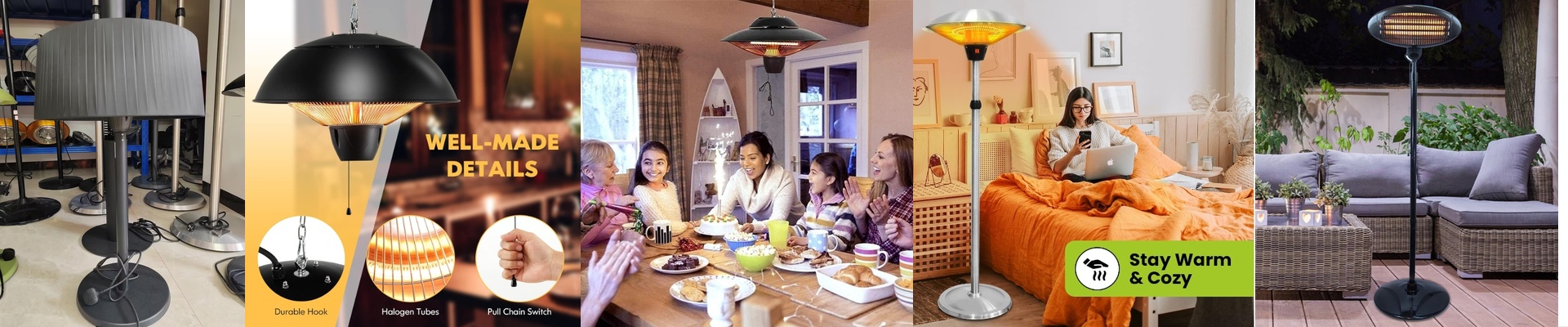
Here is the cool part: infrared doesn’t bother heating up the air around you. Instead, it sends out waves that warm your skin and your furniture directly. When you tap a button on your smart home app, the power hits the filament and—boom. You feel it. No waiting around for a coil to glow or a fan to kick in. We use high-density quartz and halogen tubes specifically so you get that “instant warmth” feeling the second you ask for it.
Getting it to talk to your smart home
To get these elements playing nice with your smart hub, you’ll want a solid relay or a PWM controller. Think of it this way: the smart system is the brain that decides when to turn things on, but the heating element does all the heavy lifting. We’ve tuned these for a fast response. There’s nothing worse than clicking “Heat On” and waiting ten seconds for something to happen. With these, it’s nearly immediate.
A few things to watch out for
These are designed to be drop-in replacements, so you just wire them into your existing housing and the seal does the rest. But here is a reality check. High-wattage infrared tubes gethot. Really hot. If you’re tucking these into a tight smart-home enclosure, please, for the love of everything, make sure you have enough ventilation. If the air can’t move, you’re going to trip the thermal cut-off or, worse, melt your plastic casing. One last tip: don’t cheap out on the wires. Use a thick gauge. Thin wires drop voltage, and that just wastes electricity and kills your efficiency.