On the blow molder, uneven preform heating rarely throws a red light. You see it in scrap, in changeovers that drag, and in an operator constantly chasing temperature swings inside the heating tunnel. Let the lamp output drift, and you immediately lose control over wall thickness, clarity, and cycle speed.
What matters, technically
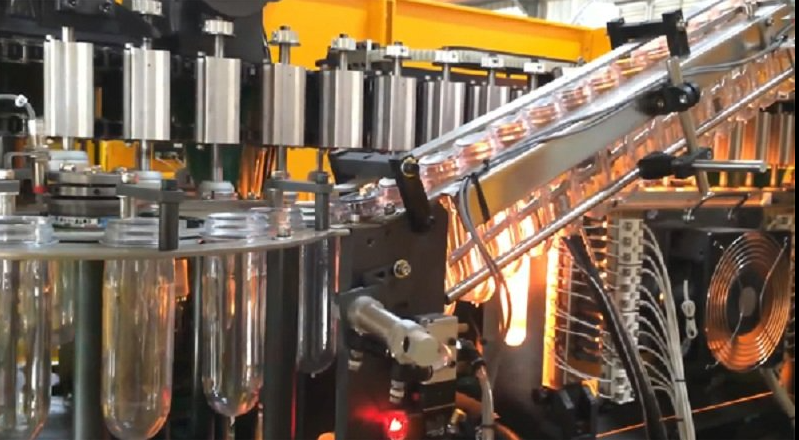
We build PET container heater lamps to match the OEM footprint—same wattage density, same spectral profile, same physical envelope. Go with short-wave quartz halogen emitters when you need fast response and a tight heat focus. Choose medium-wave infrared when you want deeper, more uniform through-heating, especially on thicker walls. Every lamp is rated for stable output across 220–240 V, with a high-temperature quartz tube and an R7s connector. That means it drops straight into the heating sections on Sidel, Krones, SIPA, Husky, SACMI, and Nissei ASB machines. We hold the geometry and filament layout so the heat profile stays consistent across the preform neck and body.
Why this matters on your floor
You run a blow molder that has to deliver repeatable heating, and downtime costs by the minute. These lamps are engineered as direct replacements, so you keep the original heating map without re-tuning the whole tunnel. The payoff is fewer rejects, faster color and format changeovers, and output that stays stable from startup to shutdown. In practice, we see lamps hold output for 5,000+ hours with less than 5% drop. That keeps the heating zone predictable and stretches the time between interventions. Energy use stays close to baseline because the emitter matches the machine’s designed power density.
The details that make the difference
OEM-grade fit doesn’t always mean plug-and-play in every plant. Handle the lamp by the base, keep the quartz clean, and check the reflector condition before you install. Misalignment or a worn reflector will skew the heat pattern—even if the lamp is within spec. Also, double-check the lamp wattage against your blow molder’s zone settings. A mismatch forces the controller to compensate, which shortens lamp life and can create hot spots. Install with the correct torque and run a thermal scan after startup to lock the profile back in.