Getting Your KHS Blow Molding Heat Actually Consistent
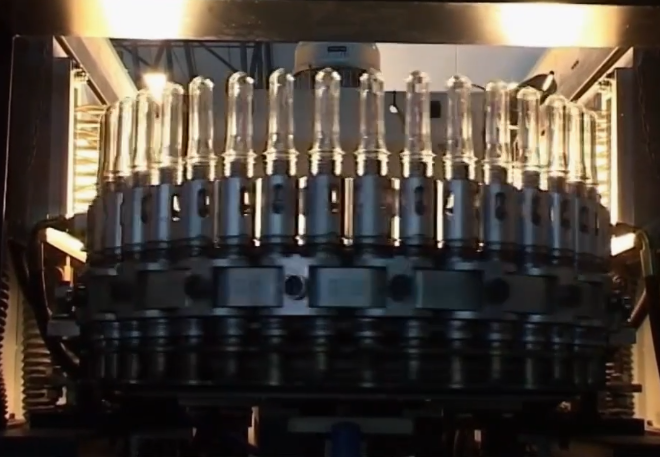
Ever pull a batch of PET bottles off the line and realize the walls are uneven? Some spots are thin, others are thick, and you’ve got structural weak points that just shouldn’t be there. If your preforms are hitting the mold with cold spots or a center that’s way too hot, it usually comes down to one thing: the IR lamps. Specifically, how they’re throwing heat.
The Trick to Even Heat
We don’t just make generic bulbs. We build our replacement IR lamps to fit the exact focal length and wattage that Krones and KHS ovens demand. Getting that “flat” thermal profile—where the heat is the same everywhere—is a bit of an art. It’s all about the filament winding and the thickness of the quartz. We obsess over the wattage-per-centimeter ratio. Here’s the catch: high-wattage tubes are great for speeding up your cycles. But if that filament isn’t centered perfectly? You get “hot stripes.” And those are a nightmare for bottle quality.
No Fancy Mods Required
We use high-purity quartz glass. Why? Because it lets shortwave radiation sink deep into the PET instead of just scorching the surface. These are drop-in replacements. We use standard industrial connectors, so you can just wire them up and get back to work. No hacking the housing, no custom brackets. One quick heads-up, though. If you decide to jump to a higher-output tube to shave a few seconds off your cycle, keep an eye on your cooling blowers. More heat means more stress on your ventilation. If the air isn’t moving, those lamps are going to burn out way faster than they should.
Closing the Gap
For a long time, you had to stick with OEM specs to get real precision. Not anymore. We’ve tightened the tolerances on the radiation patterns to match the best in the business. By keeping the output steady across the entire length of the tube, you can stop messing with the temperature settings every time you start a new run. It just works. You get a consistent heat field, which means way fewer rejected bottles and a lot less waste piling up on your shop floor.